
Allenamento vibrazionale LiV: studi e letteratura
Articoli scientifici e studi interdisciplinari
Per studi intendiamo pubblicazioni medico-scientifiche, generalmente redatte da ricercatori per altri ricercatori e quindi spesso di difficile comprensione per i non specialisti. Gli studi sono stati pubblicati anche su autorevoli riviste scientifiche e la terapia con LiV è descritta in modo dettagliato nella letteratura medico-scientifica specialistica.
Questo riflette il nostro principio: convinzione fondata su solide basi scientifiche, con l’EBM (Evidence-Based Medicine) come standard di una moderna pratica terapeutica.
Oltre 100 articoli scientifici e » studi interdisciplinari a livello biochimico, molecolare e cellulare, di cui più di 30 pubblicati su riviste peer-reviewed, inclusi diversi studi clinici randomizzati, controllati con placebo e in doppio cieco, dimostrano che la terapia favorisce lo sviluppo della massa muscolare e migliora la qualità ossea. Di seguito presentiamo alcuni contributi e studi rilevanti; su richiesta, saremo lieti di fornirLe ulteriori informazioni.
Dispositivo medico certificato  2797
2797
Marodyne LiV dispone di una certificazione come dispositivo medico di classe IIa (ai sensi della Direttiva 93/42/CEE), rilasciata dalla BSI British Standards Institution, leader internazionale nel settore delle certificazioni. Nell’ambito della valutazione clinica vengono condotte indagini sistematiche volte a documentare la sicurezza e le prestazioni del prodotto. I produttori devono dimostrare che i loro dispositivi sono sicuri e che apportano i benefici dichiarati.
1. K. S. Leung et al.: Effects of 18-month low-magnitude high-frequency vibration on fall rate and fracture risks in 710 community elderly - a cluster-randomized controlled trial, Osteoporosis Int. 2014 Jun;25(6):1785-95
2. Rubin C, Recker R, Cullen D, Ryaby J, McCabe J, McLeod K.: Prevention of postmenopausal bone loss by a low-magnitude, high-frequency mechanical stimuli... JBMR 2004 Mar, 19(3):343-351
3. Mogil RJ, Ness KK.et al.: Effect of Low-Magnitude, High-Frequency Mechanical Stimulation on BMD Among Young Childhood Cancer Survivors: A Randomized Clinical Trial. JAMA Oncol. 2016 Jul 1;2(7):908-14. doi: 10.1001/jamaoncol.2015.6557
4, Jesse Muir, Douglas Kiel, Clinton Rubin: Safety and severity of accelerations delivered from whole body vibration exercise devices to standing adults, J Sci Med Sport. 2013 Nov;16(6):526-31
5. Engin Ozcivici, Janet Rubin, Stefan Judex, Clinton T. Rubin et al.: Mechanical signals as anabolic agents in bone. Nature Reviews Rheumatology 6, 50-59, 2009 (January 2010)
6. Clinton Rubin, A. Simon Turner, Steven Bain, Craig Mallinckrodt, Kenneth McLeod: Anabolism: Low mechanical signals strengthen long bones. Nature, August 2001, Band 412, 603-604
7. Huang RP, Rubin CT, McLeod KJ: Changes in postural muscle dynamics as a function of age. J Gerontol A Biol Sci Med Sci. 1999
8. Rubin CT et al.: Quantity and Quality of Trabecular Bone in the Femur Are Enhanced by a Strongly Anabolic, Noninvasive Mechanical Intervention. J Bone Miner Res. 2002
9. Leung, KS; Cheung, WH et. al: Low-Magnitude, High-Frequency Vibration Enhances Fracture Healing and Rehabilitation in Elderly with Intertrochanteric Fractures, 2011 ORS Annual Meeting. Long Beach, CA, USA. Jan 13-16, 2011. Podium presentation
10. Kiel DP, Hannan MT, Rubin CT et al.: Low-Magnitude Mechanical Stimulation to Improve Bone Density in Persons of Advanced Age. A Randomized, Placebo-Controlled Trial. JBMR 2015 Jul;30(7):1319-28
11. Qin YX, Rubin CT, McLeod KJ: Nonlinear dependence of loading intensity and cycle number in the maintenance of bone mass and morphology. J Orthop Res. 1998 Jul;16(4):482-9
12. Weißbuch Osteoporose, Hrsg.: Berufsverband der Fachärzte für Orthopädie e.V., Berlin, 2004
13. Frankel, Victor: Biomechanical Approach to Osteoporosis, 2005, Vorlesung, Berufsgenossenschaftliche Unfallklinik Murnau, Murnau a. Staffelsee
14. Prof. Dr. Dr. Dieter Gebauer, CA Orthopädische Klinik Tegernsee, Interview 2008, Gmund / Tegernsee
15. Prof. Dr. Wolfgang Kemmler, Dr. Simon von Stengel: Ganzkörper Vibrationstraining, Mobiles Leben, 2015, Heft 3, Kuratorium Knochengesundheit e.V., Sinsheim
16. (2019) Pagnotti, Ness, Rubin, Rubin et al. - Combating osteoporosis and obesity with exercise: leveraging cell mechanosensitivity, Nature. Rev. Endo. 2019
17. (2020) Bas, Woods et al - Low Intensity Vibrations Augment Mesenchymal Stem Cell Proliferation and Differentiation Capacity during in vitro Expansion, Nature, Scientific Reports volume 10, Article number: 9369 (2020)
19. (2020) Rajapakse et al - Effect of Low Intensity Vibration on Bone Strength, Microstructure, and Adiposity in Pre-Osteoporotic Postmenopausal Women: A Randomized Placebo-Controlled Trial
20. (2022) Bianchi et al - Low-Intensity Vibration Protects the Weight-Bearing Skeleton and Suppresses Fracture Incidence in Boys With Duchenne Muscular Dystrophy: A Prospective, Randomized, Double-Blind, Placebo-Controlled Clinical Trial
1. K. S. Leung et al.: Effetti di vibrazioni a bassa ampiezza e alta frequenza per 18 mesi sul tasso di cadute e sul rischio di fratture in 710 anziani che vivono nella comunità – uno studio controllato randomizzato a cluster. Osteoporosis International, giugno 2014; 25(6): 1785–1795.
2. Rubin C., Recker R., Cullen D., Ryaby J., McCabe J., McLeod K.: Prevenzione della perdita ossea postmenopausale mediante stimoli meccanici a bassa ampiezza e alta frequenza. Journal of Bone and Mineral Research (JBMR), marzo 2004; 19(3): 343–351.
3. Mogil R. J., Ness K. K. et al.: Effetto della stimolazione meccanica a bassa ampiezza e alta frequenza sulla densità minerale ossea (BMD) nei giovani sopravvissuti al cancro infantile: uno studio clinico randomizzato. JAMA Oncology, 1 luglio 2016; 2(7): 908–914. doi: 10.1001/jamaoncol.2015.6557.
4. Jesse Muir, Douglas Kiel, Clinton Rubin: Sicurezza e intensità delle accelerazioni generate dai dispositivi di allenamento a vibrazione di tutto il corpo negli adulti in posizione eretta. Journal of Science and Medicine in Sport, novembre 2013; 16(6): 526–531.
5. Engin Ozcivici, Janet Rubin, Stefan Judex, Clinton T. Rubin et al.: I segnali meccanici come agenti anabolici nell’osso. Nature Reviews Rheumatology, 6: 50–59, 2009 (gennaio 2010).
6. Clinton Rubin, A. Simon Turner, Steven Bain, Craig Mallinckrodt, Kenneth McLeod: Anabolismo: segnali meccanici a bassa intensità rafforzano le ossa lunghe. Nature, agosto 2001, volume 412, pp. 603–604.
7. Huang RP, Rubin CT, McLeod KJ: Cambiamenti nella dinamica dei muscoli posturali in funzione dell’età. Journal of Gerontology A: Biological Sciences and Medical Sciences, 1999.
8. Rubin CT et al.: Quantità e qualità dell’osso trabecolare nel femore sono migliorate grazie a un intervento meccanico fortemente anabolico e non invasivo. Journal of Bone and Mineral Research, 2002.
9. Leung KS, Cheung WH et al.: Le vibrazioni a bassa ampiezza e alta frequenza migliorano la guarigione delle fratture e la riabilitazione negli anziani con fratture intertrocanteriche. ORS Annual Meeting 2011, Long Beach, California, USA, 13–16 gennaio 2011. Presentazione orale (podium presentation).
10. Kiel DP, Hannan MT, Rubin CT et al.: Stimolazione meccanica a bassa ampiezza per migliorare la densità ossea nelle persone in età avanzata: uno studio randomizzato controllato con placebo. Journal of Bone and Mineral Research (JBMR), luglio 2015; 30(7): 1319–1328.
11. Qin YX, Rubin CT, McLeod KJ: Dipendenza non lineare tra intensità del carico e numero di cicli nel mantenimento della massa e della morfologia ossea. Journal of Orthopaedic Research, luglio 1998; 16(4): 482–489.
12. Weißbuch Osteoporose, a cura di: Berufsverband der Fachärzte für Orthopädie e.V.: Libro bianco sull’osteoporosi. Berlino, 2004.
13. Frankel, Victor: Approccio biomeccanico all’osteoporosi. 2005, lezione presso la Berufsgenossenschaftliche Unfallklinik Murnau, Murnau am Staffelsee.
14. Prof. Dr. Dr. Dieter Gebauer, CA Orthopädische Klinik Tegernsee: Intervista. 2008, Gmund / Tegernsee.
15. Prof. Dr. Wolfgang Kemmler, Dr. Simon von Stengel: Allenamento con vibrazioni a corpo intero. Mobiles Leben, 2015, numero 3, Kuratorium Knochengesundheit e.V., Sinsheim.
16. (2019) Pagnotti, Ness, Rubin, Rubin et al.: Contrastare osteoporosi e obesità con l’esercizio fisico: sfruttare la meccanosensibilità cellulare. Nature Reviews Endocrinology, 2019.
17. (2020) Bas, Woods et al.: Le vibrazioni a bassa intensità aumentano la proliferazione delle cellule staminali mesenchimali e la capacità di differenziazione durante l’espansione in vitro. Nature – Scientific Reports, volume 10, articolo n. 9369 (2020).
18. (2020) Pagnotti et al.: La soppressione meccanica dell’invasione delle cellule del carcinoma mammario e della segnalazione paracrina verso gli osteoclasti richiede la connettività nucleo-citoscheletrica.
19. (2020) Rajapakse et al.: Effetto delle vibrazioni a bassa intensità sulla resistenza ossea, sulla microstruttura e sull’adiposità nelle donne in postmenopausa con stato pre-osteoporotico: uno studio randomizzato controllato con placebo.
20. (2022) Bianchi et al.: Le vibrazioni a bassa intensità proteggono lo scheletro sottoposto a carico e riducono l’incidenza di fratture nei ragazzi con distrofia muscolare di Duchenne: uno studio clinico prospettico, randomizzato, in doppio cieco e controllato con placebo.
Marodyne LiV
La particolarità risiede negli impulsi delicati ma allo stesso tempo stimolanti del nostro sistema terapeutico. La tecnologia utilizzata per generare questi impulsi è brevettata e protetta. Marodyne LiV è leader nel settore e uno dei dispositivi medici certificati più moderni al mondo per l'allenamento a vibrazione, in grado di applicare impulsi di 0,4 g con un'ampiezza di circa 0,1 mm. Questi impulsi offrono un elevato livello di sicurezza e tollerabilità.
Prof. Dr. Clinton Rubin

Prof. Dr. Clinton Rubin sul tema LiV – Allenamento vibrazionale per il trattamento dell’osteoporosi, dell’immobilità e della debolezza muscolare legata all’età (sarcopenia) » mehr
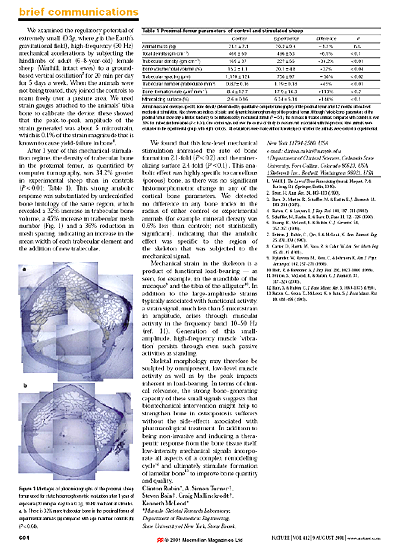
Anabolismo: segnali meccanici a bassa intensità rafforzano le ossa lunghe.
Clinton Rubin, A. Simon Turner, Steven Bain, Craig Mallinckrodt & Kenneth McLeod
[2001 Rubin – Anabolismo] Sebbene la capacità dello scheletro di adattarsi al carico sia riconosciuta da oltre un secolo, i componenti meccanici specifici responsabili del suo rafforzamento non erano stati identificati. In questo studio dimostriamo che, dopo aver sottoposto quotidianamente per un anno gli arti posteriori di pecore adulte a stimolazioni meccaniche di 20 minuti con vibrazioni a bassissima intensità e alta frequenza, la densità dell’osso spugnoso (trabecolare) nel femore prossimale aumenta in modo significativo (del 34,2%) rispetto al gruppo di controllo. Poiché i livelli di sollecitazione generati da questo trattamento sono di tre ordini di grandezza inferiori rispetto a quelli che causano danni al tessuto osseo, questo stimolo anabolico e non invasivo potrebbe avere un potenziale nel trattamento di patologie scheletriche come l’osteoporosi … » Scopri di più
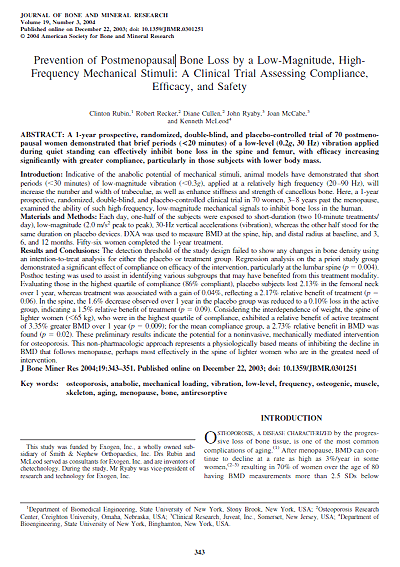
Prevenzione della perdita ossea postmenopausale mediante stimoli meccanici a bassa ampiezza e alta frequenza: uno studio clinico che valuta aderenza, efficacia e sicurezza.
Clinton Rubin, Robert Recker, Diane Cullen, John Ryaby, Joan McCabe, and Kenneth McLeod
[2004 Rubin – Perdita ossea postmenopausale] Uno studio prospettico della durata di un anno, randomizzato, in doppio cieco e controllato con placebo, condotto su 70 donne in postmenopausa, ha dimostrato che brevi periodi (<20 minuti) di vibrazione a bassa intensità (0,2 g, 30 Hz), applicati durante la semplice posizione eretta, possono inibire efficacemente la perdita ossea nella colonna vertebrale e nel femore. L’efficacia aumenta in modo significativo con una maggiore aderenza al trattamento, in particolare nelle donne con massa corporea più bassa. Introduzione: a conferma del potenziale anabolico degli stimoli meccanici, modelli animali hanno dimostrato che brevi periodi (<30 minuti) di vibrazione a bassa intensità (<0,3 g) … » Scopri di più
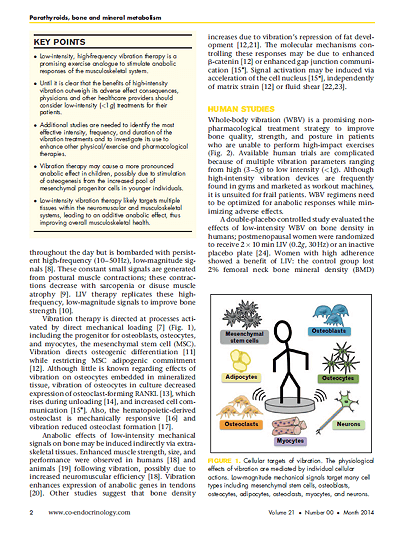
Terapia con vibrazioni: applicazioni cliniche nell’osso
[2014 J. Rubin – Vibration Therapy] Il sistema muscoloscheletrico è in gran parte regolato dall’attività fisica dinamica e risente negativamente della cessazione del carico meccanico. È quindi necessario ricreare gli effetti anabolici del carico sul sistema muscoloscheletrico, soprattutto nelle persone fragili che non possono svolgere attività fisica. La vibroterapia è concepita come un’alternativa non farmacologica all’attività fisica, con l’obiettivo di promuovere la salute di ossa e muscoli … » Scopri di più
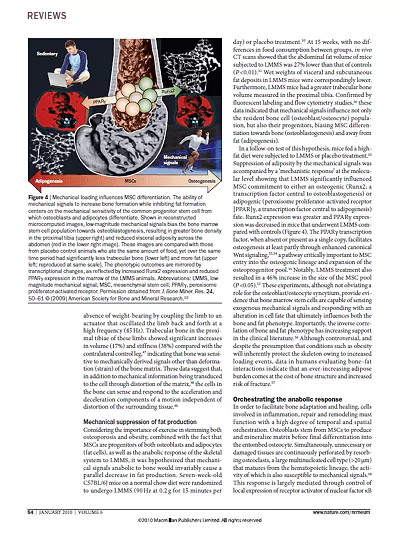
Segnali meccanici come agenti anabolici nell’osso.
Engin Ozcivici, Yen Kim Luu, Ben Adler, Yi-Xian Qin, Janet Rubin, Stefan Judex and Clinton T. Rubin
[2010 Ozcivici – Agenti anabolici] L’invecchiamento e uno stile di vita sedentario contribuiscono a ridurre la quantità e la qualità dell’osso, a diminuire la massa e la forza muscolare e a compromettere la stabilità posturale, con conseguente aumento del rischio di fratture scheletriche.
Parallelamente, una marcata riduzione della popolazione di cellule staminali mesenchimali (MSC) derivate dal midollo osseo compromette il potenziale rigenerativo, fondamentale per il recupero da lesioni e patologie dell’apparato muscoloscheletrico. Un possibile approccio per contrastare questo deterioramento consiste nello sfruttare la sensibilità dell’osso ai segnali meccanici, fondamentale per definirne, mantenerne e ripristinarne … » Scopri di più
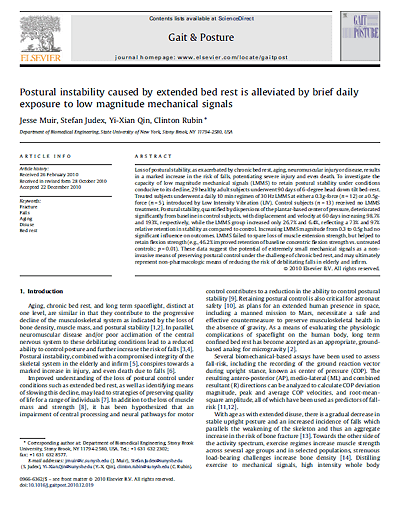
Postural instability caused by extended bed rest is alleviated by brief daily exposure to low magnitude mechanical signals
Jesse Muir, Stefan Judex, Yi-Xian Qin, Clinton Rubin
[2011 Muir - Postural instability] Loss of postural stability, as exacerbated by chronic bed rest, aging, neuromuscular injury or disease, results in a marked increase in the risk of falls, potentiating severe injury and even death. To investigate the capacity of low magnitude mechanical signals (LMMS) to retain postural stability under conditions conducive to its decline... » mehr
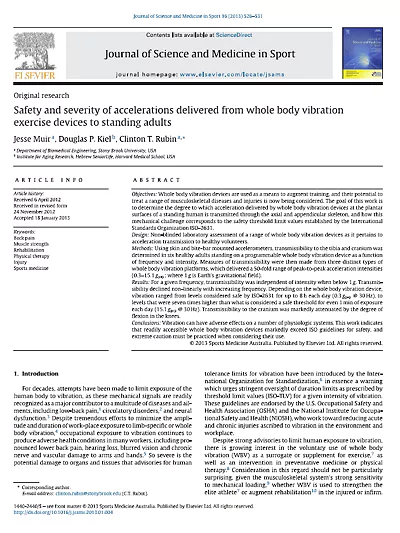
Safety and severity of accelerations delivered from whole body vibration exercise devices to standing adults
Jesse Muir, Ph.D., Douglas P. Kiel, M.D., M.P.H, and Clinton T. Rubin, Ph.D.
[2013 Muir - Safety and severity] Whole Body Vibration (WBV) devices are used as a means to augment training, and their potential to treat a range of musculoskeletal diseases and injuries is now being considered. The goal of this work is to determine the degree to which acceleration delivered by WBV devices at the plantar surfaces of a standing human is transmitted through the axial and appendicular skeleton, and how this mechanical challenge corresponds to the safety Threshold Limit Values (TLV) established by the International Standards Organization ISO-2631... » mehr
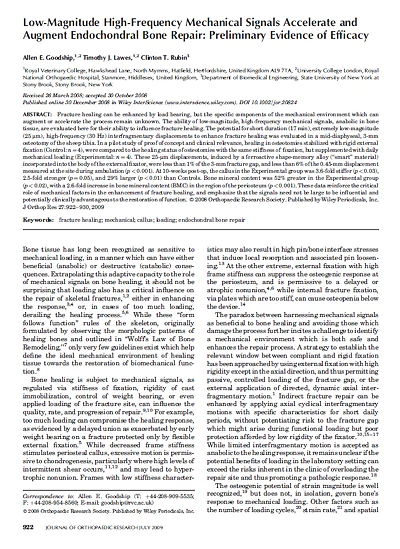
Low-Magnitude High-Frequency Mechanical Signals Accelerate and Augment Endochondral Bone Repair: Preliminary Evidence of Efficacy.
Allen E. Goodship, Timothy J. Lawes, and Clinton T. Rubin.
[2009 Goodship - Bone repair] Fracture healing can be enhanced by load bearing, but the specific components of the mechanical environment which can augment or accelerate the process remain unknown. The ability of low-magnitude, high-frequency mechanical signals, anabolic in bone tissue, are evaluated here for their ability to influence fracture healing. The potential for short duration (17 min), extremely low-magnitude (25 μm), high-frequency (30 Hz) interfragmentary displacements... » mehr
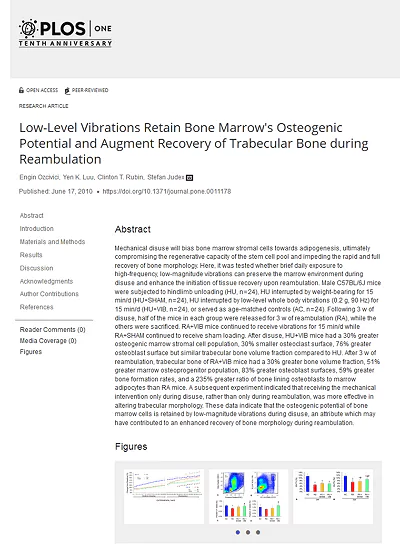
Low-Level Vibrations Retain Bone Marrow's Osteogenic Potential and Augment Recovery of Trabecular Bone during Reambulation.
Engin Ozcivici, Yen K. Luu, Clinton T. Rubin, Stefan Judex
[2010 Ozcivici - Osteogenic Potential] Mechanical disuse will bias bone marrow stromal cells towards adipogenesis, ultimately compromising the regenerative capacity of the stem cell pool and impeding the rapid and full recovery of bone morphology. Here, it was tested whether brief daily exposure to high-frequency, low-magnitude vibrations can preserve the marrow environment during disuse and enhance the initiation of tissue recovery upon reambulation.... » mehr
Low-Level, High-Frequency Mechanical Signals Enhance Musculoskeletal Development of Young Women With Low BMD.
Vicente Gilsanz, Tishya AL Wren, Monique Sanchez, Frederick Dorey, Stefan Judex, and Clinton Rubin
[2006 Gilsanz - Musculoskeletal Development] The potential for brief periods of low-magnitude, high-frequency mechanical signals to enhance the
Low-Level, High-Frequency Mechanical Signals Enhance Musculoskeletal Development
musculoskeletal system was evaluated in young women with low BMD. Twelve months of this noninvasive signal, induced as whole body vibration for at least 2 minutes each day, increased bone and muscle mass in the axial skeleton and lower extremities compared with controls. Introduction: The incidence of osteoporosis, a disease that manifests in the elderly, may be reduced by increasing peak bone mass in the young. Preliminary data indicate that extremely low-level mechanical signals are anabolic to bone tissue, and their ability to enhance bone and muscle mass... » mehr


Low-Intensity Vibration Protects the Weight-Bearing Skeleton and Suppresses Fracture Incidence in Boys With Duchenne Muscular Dystrophy:
A Prospective, Randomized, Double-Blind, Placebo-Controlled Clinical Trial
Maria Luisa Bianchi, Silvia Vai, Giovanni Baranello, Francesca Broggi, Stefan Judex, Thomas Hangartner and Clinton Rubin
Clinton Rubin: "A major consequence of Duchenne Muscular Dystrophy is poor bone strength, with high susceptibility to fracture. This study shows that patients with Duchenne, who stood on the device for 10 minutes per day over the course of a year, built up bone structure in the lower limbs, and suppressed the formation of fat. Importantly, in contrast to the control group that showed multiple fractures one year later, there were no incidence of fracture in the treated group. This clinical trial provides further evidence that low intensity vibration can protect the skeleton and aid in the resistance to fracture."
Una delle principali conseguenze della distrofia muscolare di Duchenne è la ridotta resistenza delle ossa, con un’elevata suscettibilità alle fratture. Questo studio mostra che i pazienti con Duchenne che, nel corso di un anno, sono rimasti 10 minuti al giorno sul dispositivo hanno sviluppato la struttura ossea negli arti inferiori e ridotto la formazione di tessuto adiposo. È importante sottolineare che, a differenza del gruppo di controllo, che un anno dopo ha mostrato diverse fratture, nel gruppo trattato non si sono verificate fratture. Questo studio clinico fornisce ulteriori prove che vibrazioni a bassa intensità possono proteggere lo scheletro e aumentare la resistenza alle fratture.